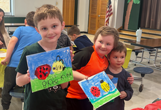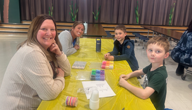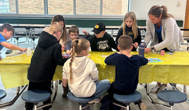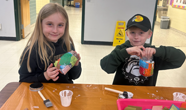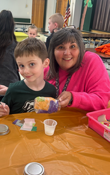
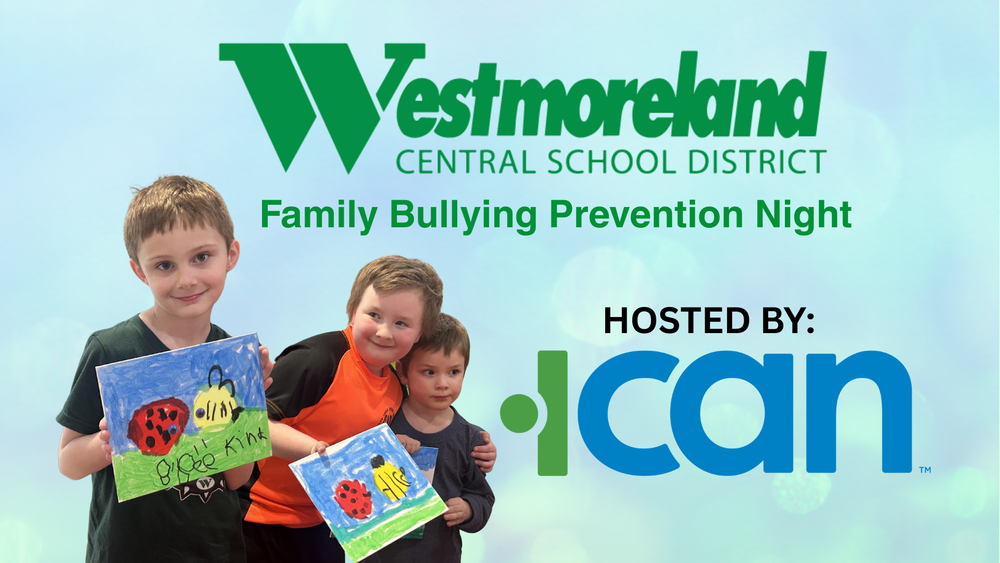
The Primary School recently welcomed families for an educational and engaging Family Bullying Prevention Night in partnership with ICAN. It was an evening filled with both fun and meaningful learning, as students and their families participated in interactive activity stations designed to build understanding, empathy, and positive social skills.
Throughout the evening, families learned more about how schools support students and address concerns related to peer interactions. In New York State, the Dignity for All Students Act (DASA) helps protect students from bullying, harassment, and discrimination, and outlines the steps schools take to investigate and respond to concerns.
Understanding the Difference: Conflict vs. Bullying
One of the most important takeaways from the evening was understanding the difference between conflict and bullying—two terms that are often confused.
Conflict may include:
Disagreements
Hurt feelings during play
Trouble sharing, taking turns, communicating, or including others
Arguments or unkind moments
Bullying is behavior that is:
Repeated
Targeted at a specific person
Intentionally hurtful or harmful
Often involves a power imbalance
Because students in grades PK–2 are still developing social, communication, and problem-solving skills, the school places a strong emphasis on teaching kindness, empathy, friendship, and how to repair mistakes.
What Should Families Do?
If your child shares a concern, families are encouraged to:
Listen calmly
Acknowledge that your child came to you
Ask simple, non-leading questions
Contact your child’s teacher
Share any patterns or repeated concerns with the school
How the School Responds
When a concern is reported, the school will:
Take all reports seriously
Gather information
Speak with students and staff
Determine whether the situation is conflict or possible bullying
Respond with support, teaching, intervention, and consequences when appropriate
Important Reminders for Families
Not every conflict is bullying—however, every concern matters
The goal is always to respond, support, and teach
Discipline is progressive
Due to student privacy laws, specific details about other students cannot be shared
Supporting Students at Home
Families can reinforce these important skills by encouraging children to:
Use clear language such as “stop” or “I don’t like that”
Walk away and seek help from an adult
Include others
Be kind both in person and online
Tell an adult if behavior is repeated, hurtful, or makes them feel unsafe
Understanding and correctly using the term “bullying” can sometimes be confusing for students, families, and schools. A simple message to remember is:
If it’s repeated, hurtful, or makes you feel unsafe—tell an adult immediately.